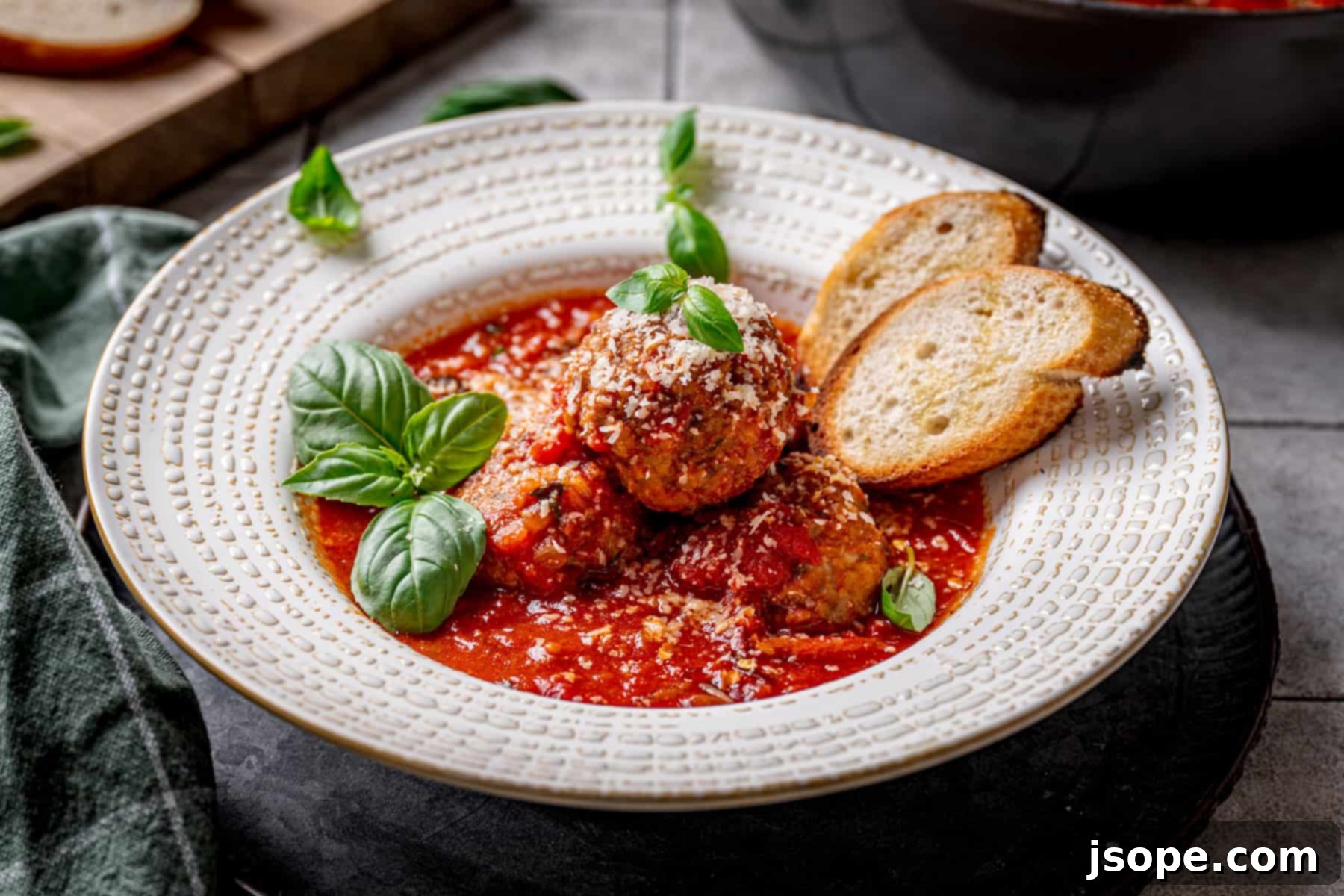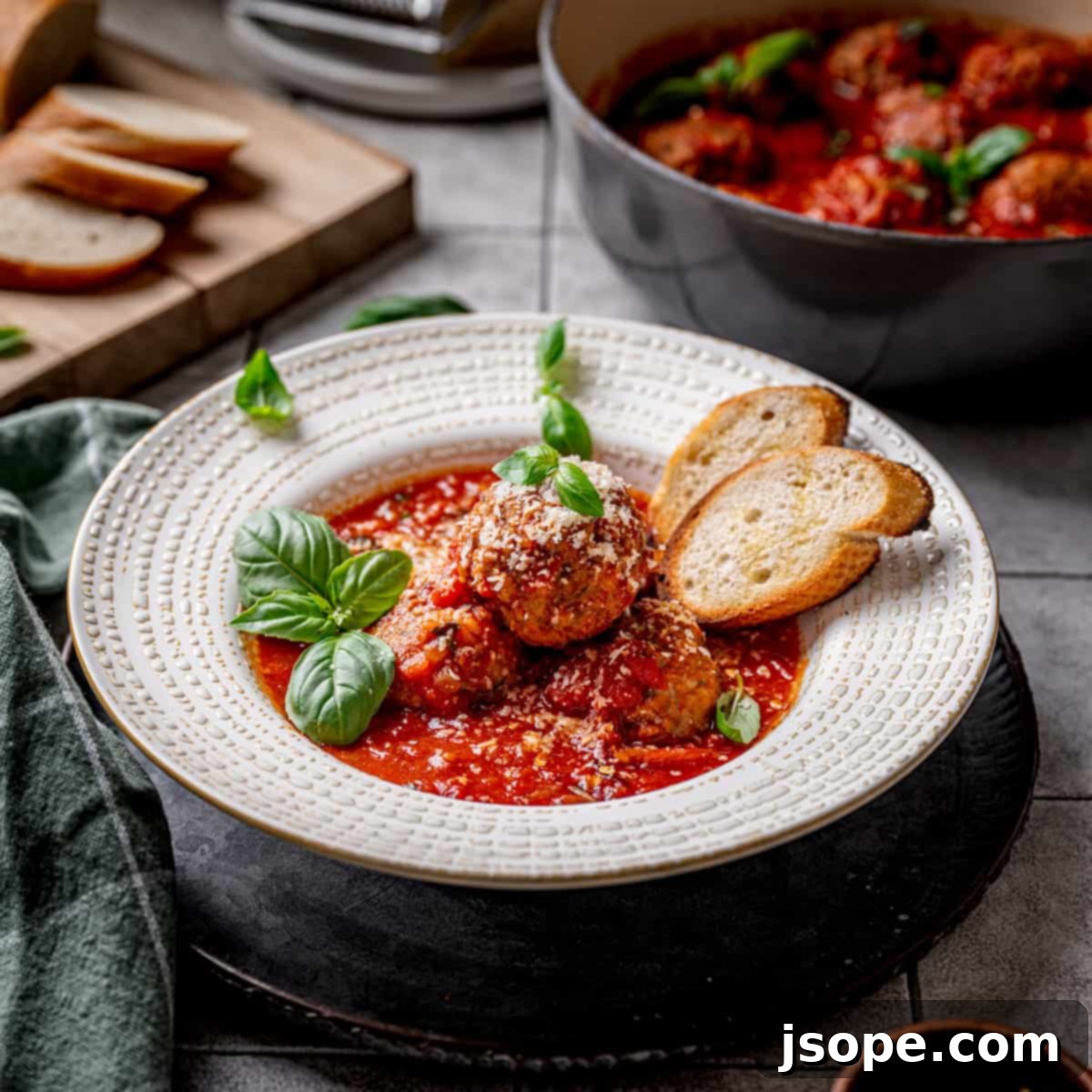
Savor the taste of Italy with these incredibly tender and flavorful Classic Italian Meatballs, simmered to perfection in a rich and delectable tomato sauce. This recipe uses a harmonious blend of three meats – beef, veal, and pork – combined with a medley of delightful ingredients, capturing the authentic essence of Italian cuisine. Whether you’re looking for crowd-pleasing appetizers, a hearty main course, or the perfect filling for an Italian Meatball Sub, these meatballs are guaranteed to be a hit. Get ready to enjoy the best Italian meatballs that everyone will love!
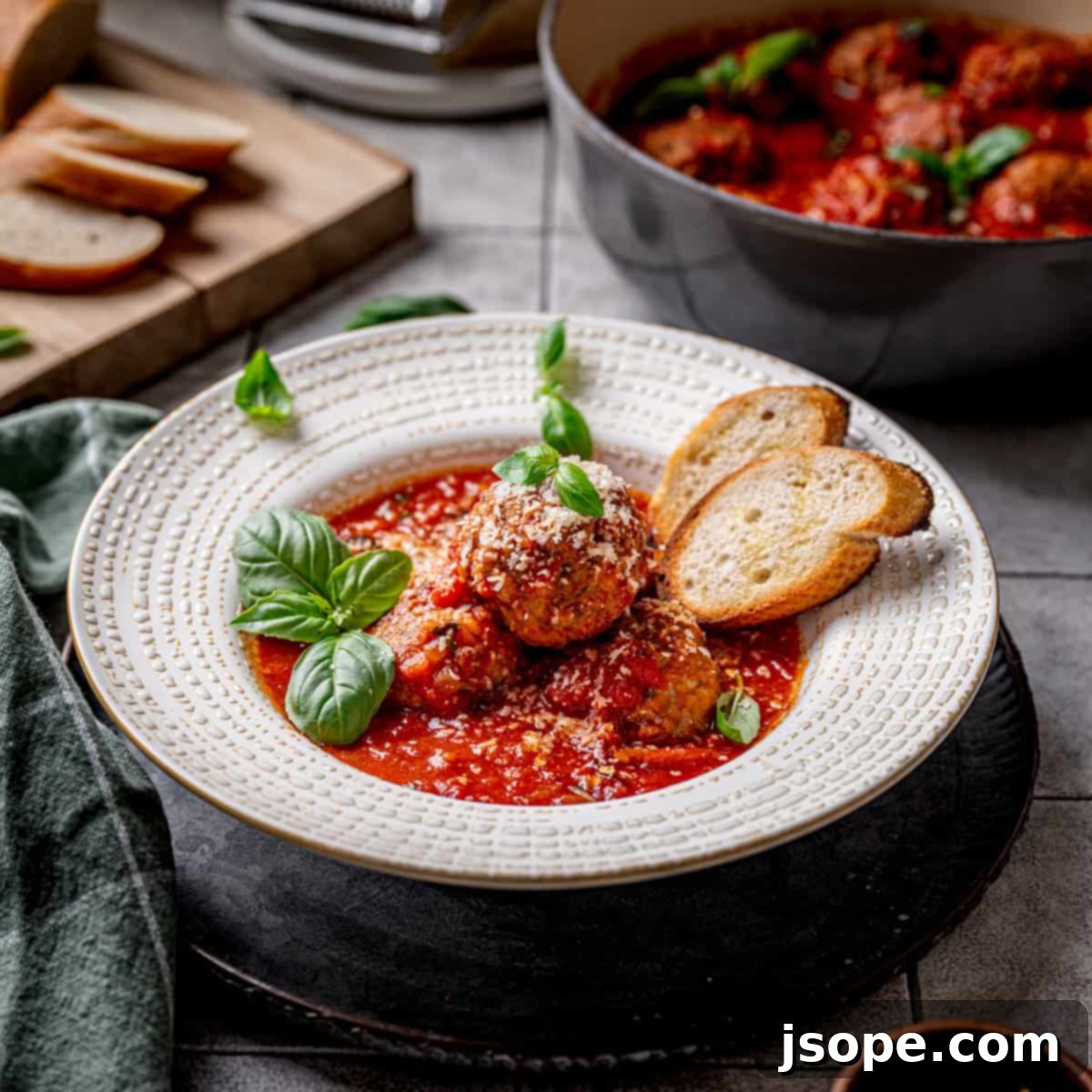
Craving more delicious recipes like this? Explore our Fettuccine with Winter Spiced Cream Sauce and Rosemary Sage Meatballs or our Baked Veal Saltimbocca Meatballs in Brown Butter Sage Sauce for more culinary inspiration.
Why You’ll Adore This Italian Meatballs Recipe
- These meatballs are incredibly tender and juicy, bursting with flavor in every bite.
- They taste even better the next day, making them perfect for leftovers.
- Versatile and comforting, these meatballs can be served with pasta, rice, polenta, or even in a sandwich, bringing the authentic taste of Italian cooking to your home.
- Make a big batch ahead of time! These meatballs can be easily frozen, either on their own or in the tomato sauce, for a quick and delicious meal anytime.
- Everyone loves meatballs! These are guaranteed to be a family favorite.
What Makes Authentic Italian Meatballs So Special?
The magic of authentic Italian meatballs lies in the perfect marriage of flavor and texture, transforming a simple dish into a culinary masterpiece. While achieving a rich flavor profile is important, the true challenge lies in creating a meatball that’s neither dense nor dry. When made correctly, these delicious and tender meatballs become unforgettable, quickly becoming a comfort food favorite and your go-to meatball recipe for generations to come.
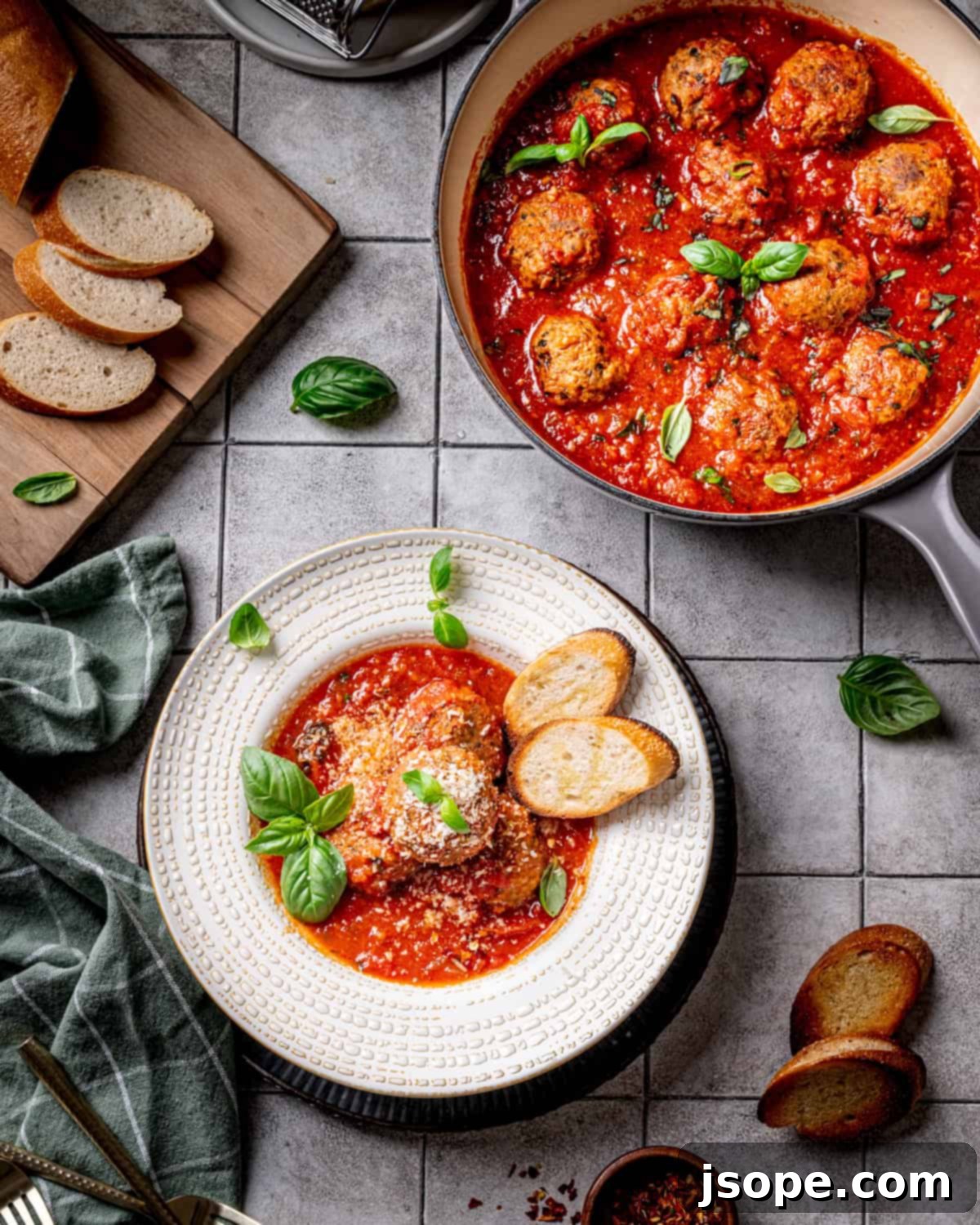
Key Ingredients for the Best Italian Meatballs
Here’s a breakdown of the ingredients you’ll need to create these mouthwatering meatballs:
- Bread: We recommend using sourdough bread with the crust removed. Bread is a traditional ingredient in Italian meatballs, helping to create a light and airy texture while also acting as a binding agent.
- Milk: Soaking the bread in milk before adding it to the meatball mixture ensures the meatballs remain incredibly tender and juicy throughout the cooking process.
- Wine: A touch of dry red wine softens the bread while infusing a subtle depth of flavor into the meatball mixture.
- Ground Beef: We prefer using 85/15 ground beef for this recipe, as the fat content is perfectly balanced by the inclusion of ground pork and veal.
- Ground Pork: Ground pork adds a rich and savory flavor to the meatballs, while its higher fat content helps keep them tender and moist.
- Ground Veal: This is our secret weapon! Ground veal imparts a delicate flavor and contributes to the meatballs’ exceptional texture.
- Fresh Parsley: Freshly chopped parsley brightens the overall flavor profile of the meatballs, adding a hint of freshness.
- Fresh Basil: A classic Italian ingredient, fresh basil adds a fragrant and aromatic note to the meatballs.
- Dried Oregano: We prefer dried oregano in this recipe for its concentrated flavor, which complements the fresh herbs beautifully.
- Onion Powder: Onion powder delivers a subtle onion flavor without adding any chunks of onion to the meatballs.
- Garlic Powder: A touch of garlic powder provides a hint of garlicky flavor without being overpowering.
- Red Pepper Flakes: These add a subtle kick of spice, enhancing the overall flavor profile without making the meatballs overly spicy.
- Salt & Pepper: A generous seasoning of kosher salt and freshly ground black pepper enhances all the other flavors in the meatballs.
- Parmesan Cheese: The “king of cheeses,” Parmigiano Reggiano, adds a delightful richness and savory depth to the meatballs. Be sure to use freshly grated, real Parmesan for the best results.
- Eggs: A combination of one whole egg and two egg yolks adds richness and helps bind all the ingredients together, creating a desirable texture in the finished meatballs.
- Italian Tomato Sauce: This sugo di pomodoro sauce is the perfect complement to the meatballs, providing a rich and flavorful sauce in which to simmer and finish cooking them.
Refer to the recipe card below for specific ingredient quantities.
Ingredient Substitutions
Need to make a few tweaks? Here are some common substitutions for the ingredients in this recipe:
- Bread: If you don’t have sourdough on hand, you can substitute with another crusty Italian bread or even a French baguette.
- Meats: For a simpler approach, you can use all ground beef or a 2:1 ratio mixture of ground beef and either ground pork or veal. However, the combination of all three meats truly elevates the texture and flavor of these meatballs.
- Parmesan: Grana Padano or Pecorino Romano cheeses can be used as high-quality substitutes for Parmesan cheese.
- Tomato Sauce: While we highly recommend our homemade sugo di pomodoro, you can easily use your favorite store-bought Italian tomato sauce, marinara sauce, or spaghetti sauce.
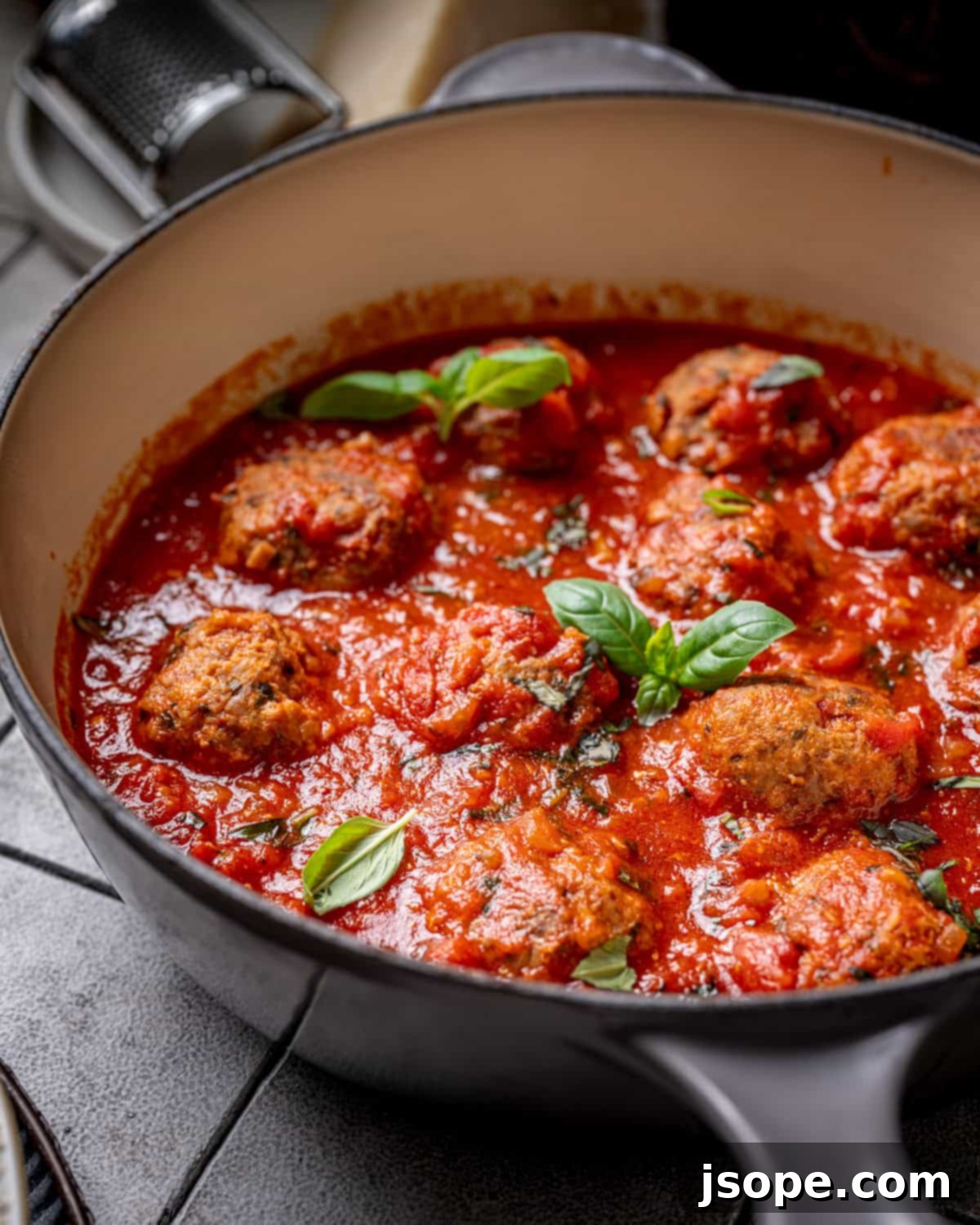
How to Make Classic Italian Meatballs: A Simple Guide
This classic dish is as easy as mixing, rolling, baking, and simmering! With just a few simple steps, you’ll be enjoying these mouthwatering meatballs in no time.
Essential Equipment
Before you begin, make sure you have the following equipment on hand:
- Large Mixing Bowl
- Kitchen Scale (optional, but recommended for uniform meatballs)
- Baking Sheets
- Parchment Paper
Step-by-Step Instructions for Perfect Italian Meatballs
Step 1: Prepare the Tomato Sauce
- If you’re making our sugo di pomodoro from scratch, begin the sauce before starting your meatballs. Otherwise, skip to the next step if you’re using pre-made Italian tomato sauce.
Step 2: Soak the Bread
- In a large bowl, combine the torn bread pieces, milk, and wine. Allow the bread to soak for at least 5 minutes, or until you’ve finished preparing the remaining ingredients.
Step 3: Make the Meatball Mixture
- Add the ground beef, ground pork, ground veal, and all remaining ingredients (except the tomato sauce) to the bowl with the milk-soaked bread. Use a gloved hand or your bare hand to thoroughly mix everything together until well combined.
Step 4: Roll Out the Meatballs
- Preheat your oven to 375°F (190°C).
- While the oven preheats, line two baking sheets with parchment paper. Roll the meatball mixture between your hands to form meatballs. For consistent size and even cooking, we recommend making 3-ounce (85-gram) meatballs, using a kitchen scale to weigh each one. They should be slightly larger than a golf ball. Arrange the meatballs in a single layer on the prepared baking sheets, leaving some space between each.
Step 5: Bake the Meatballs
- Place the baking sheets in the preheated oven and bake the meatballs for approximately 20 minutes.
Step 6: Heat the Sauce and Finish the Dish
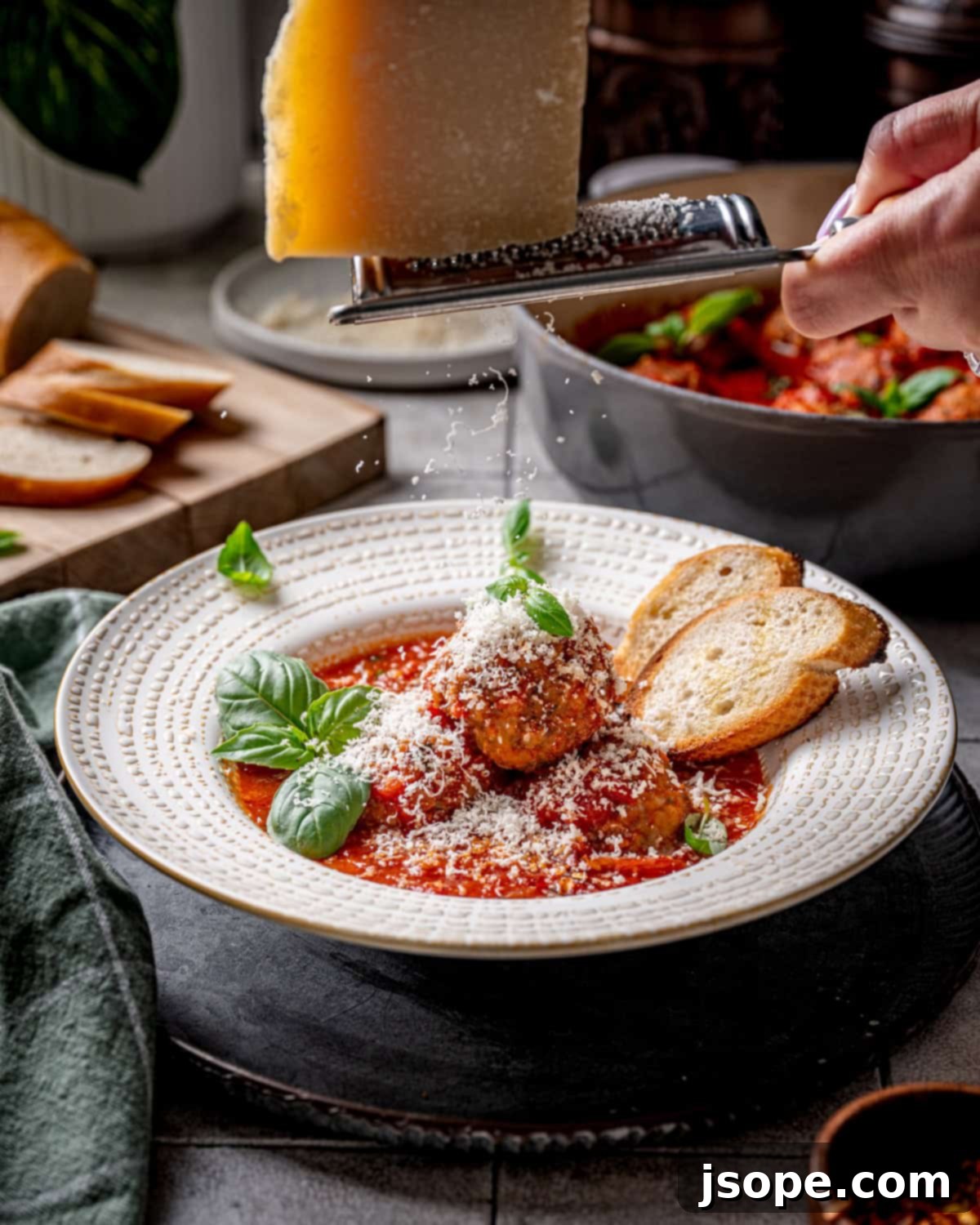
- While the meatballs are baking, heat your tomato sauce in a large pot over medium heat. Once the meatballs are baked, transfer them to the pot of simmering sauce and cook for an additional 10-15 minutes. Ensure the pork is fully cooked through. Remove from heat and serve immediately, garnished with fresh basil leaves, freshly grated Parmigiano Reggiano cheese, and crusty bread for soaking up that delicious sauce!
Meatball Variations
Looking to switch things up? Here are a few variations to try with this Italian Meatballs recipe:
- For a lighter alternative, try making the meatballs with ground chicken or ground turkey.
- If you’re not planning to finish cooking the meatballs in tomato sauce, bake them in the oven for an additional 8-10 minutes to ensure they’re fully cooked through.
Storing and Reheating Leftover Meatballs
Here’s how to properly store and reheat leftover meatballs to maintain their deliciousness:
- How to store leftover meatballs: Store the meatballs in an airtight container in the refrigerator for up to 5 days, or freeze for up to 3 months.
Reheating Tips
- How to reheat leftover meatballs: Reheat them either on the stovetop in the sauce, or in a covered oven-safe dish in the oven at 325°F (160°C) until heated through.
Freezing for Later
- Can you freeze leftover meatballs? Absolutely! They will maintain their quality for up to 3 months. When you’re ready to enjoy them, simply transfer the frozen meatballs to a pot of tomato sauce and simmer over low heat until they are fully defrosted and heated through.
Top Tip for Meatball Perfection
For consistently sized meatballs that cook evenly, weighing them using a kitchen scale is highly recommended.
Troubleshooting Salty Meatballs
If you are not using kosher salt, be mindful of the saltiness level, as other types of salt may be more intense. If using table salt or a coarse sea salt, reduce the amount accordingly to avoid overly salty meatballs.
Serving Suggestions
Classic Italian Meatballs are incredibly versatile and pair well with a wide variety of dishes. They’re delicious on a sandwich with melty provolone cheese, served over pasta, or enjoyed on their own with a fresh salad. They’re also a great accompaniment to creamy polenta or flavorful risotto rice.
Wine Pairing Guide
For an authentic Italian experience, pair these meatballs with your favorite dry red wine that complements tomato-based sauces. Whether you prefer a bold and robust wine or a subtle and lighter option, you can’t go wrong. We often reach for an Italian Sangiovese, such as Chianti Classico, or another Tuscan red wine to enhance the overall flavors of the dish.
Frequently Asked Questions About Italian Meatballs
What’s the secret to making tender and juicy Italian meatballs?
We believe the secret lies in the milk- and wine-soaked bread, combined with the perfectly balanced meat ratio and the addition of egg yolks.
What sets Italian-style meatballs apart from other types of meatballs?
The distinct flavors, of course! Unlike Swedish meatballs or American homestyle meatballs, Italian meatballs typically include oregano, basil, and Parmesan cheese. The combination of beef, pork, and veal is also a classic Italian approach to making polpette (meatballs)! Furthermore, each version is served with a different sauce. Italians generally serve their meatballs in a sugo di pomodoro (Italian tomato sauce), while American homestyle meatballs may be served with barbecue sauce, and Swedish meatballs are served in a creamy gravy.
Do Italians eat meatballs with pasta in Italy?
The answer is both yes and no, but not in the same way that’s popularized in the USA. Polpette are usually eaten as a second course of protein, often served in a tomato sauce similar to this recipe. The pasta would come before this course, and you won’t find large meatballs sitting on top of a mound of spaghetti! While some regions in Italy serve tiny meatballs mixed into pasta or with al forno (baked) pasta dishes, Italians generally serve meatballs as a second course after a first course of pasta.
Related Recipes
Looking for more delicious Italian-inspired recipes like this one? Try these:
- Baked Italian Herb Stuffed Shrimp with Lime Butter
- Classic Italian Meatballs in Tomato Sauce (Polpette al Sugo)
- Cheesy Pistachio Pesto Chicken with Roasted Cherry Tomatoes
- Braised Veal Shanks with Gremolata (Ossobuco Recipe)
Perfect Side Dishes
These are our favorite side dishes to serve with Italian Meatballs:
- Garlic Herb Sautéed Italian Eggplant Recipe
- Spicy Charred Calabrian Chili Broccolini
- Brown Butter and Sage Polenta Recipe
- Baked Zucchini Parmigiana – Easy al Forno Recipe
Classic Italian Meatballs Recipe
Prep Time: 30 mins
Cook Time: 35 mins
Total Time: 1 hr 5 mins
Servings: 8
Course: Appetizers, Dinner, secondo
Cuisine: Italian
Calories: 457 kcal
Instructions:
Prepare the Tomato Sauce
- If you plan to make sugo di pomodoro from scratch, begin cooking the sauce before starting your meatballs. If using pre-made Italian tomato sauce, then skip to the next step.
Soak the Bread
- In a large bowl, add the bread pieces, milk, and wine. Let the bread soak for as long as it takes to prepare your other ingredients, but at least 5 minutes.
Make the Meatball Mixture
- Add the three meats and all of the other ingredients (except the tomato sauce) to the bowl with the milk-soaked bread. With a gloved or bare hand, mix everything well to combine.
Roll out the Meatballs
- Preheat the oven to 375°F.
- While the oven is preheating, prepare two half sheet trays by putting parchment paper on them. Make the meatballs by rolling them between your hands. We like to make 3-ounce (85 grams) meatballs and use a kitchen scale to weigh each one so they are all the same size (slightly larger than a golf ball). As you roll the meatballs, place them on the parchment paper-lined baking sheets in a single layer with some space in between each meatball.
Bake the Meatballs
- Place the baking sheets in the preheated oven and bake the meatballs for about 20 minutes.
Heat the Sauce and Finish the Dish
- While the meatballs are baking, heat your tomato sauce in a large pot over medium heat. Once the meatballs are done baking, transfer the cooked meatballs to the pot of sauce to finish for about 10-15 minutes. Since there is pork in the meatball, you want it to be fully cooked. Remove from the heat and serve with fresh basil, freshly grated parmigiano reggiano and some crusty bread to sop up the sauce!
Notes:
Substitutions:
- Bread: You can use a different crusty Italian bread or a french baguette for the bread instead of sourdough.
- Meats: You could use all beef or a mixture of beef and one of the other ground meat options in a 2:1 ratio if desired, although the combination of three meats here really adds to the perfect texture in these meatballs.
- Parmesan: Grana Padano or pecorino cheeses are both quality substitutes for parmesan.
- Homemade Tomato Sauce: We love this sugo di pomodoro recipe, but you can use your favorite Italian tomato sauce, spaghetti sauce, marinara sauce or even a store-bought version.
Storage:
- How to store leftover meatballs: Store in a covered airtight container in the refrigerator for up to 5 days or freeze for up to 3 months.
- How to reheat leftover meatballs: You can either reheat on the stovetop in the sauce or in a covered oven-safe dish in the oven at 325°F until heated through.
- Can you freeze leftover meatballs? Absolutely! They’ll be just as good within 3 months. When ready to enjoy, you can transfer the frozen meatballs into a pot of tomato sauce and simmer on low until defrosted fully then serve.
Top Tips:
- Weighing the meatballs really helps keep them uniform and they’ll cook evenly and perfectly.